The Xtermigator Report: The Dog Days Are Here : Yellow Jacket Ground Nests & NY's Mosquito Warning
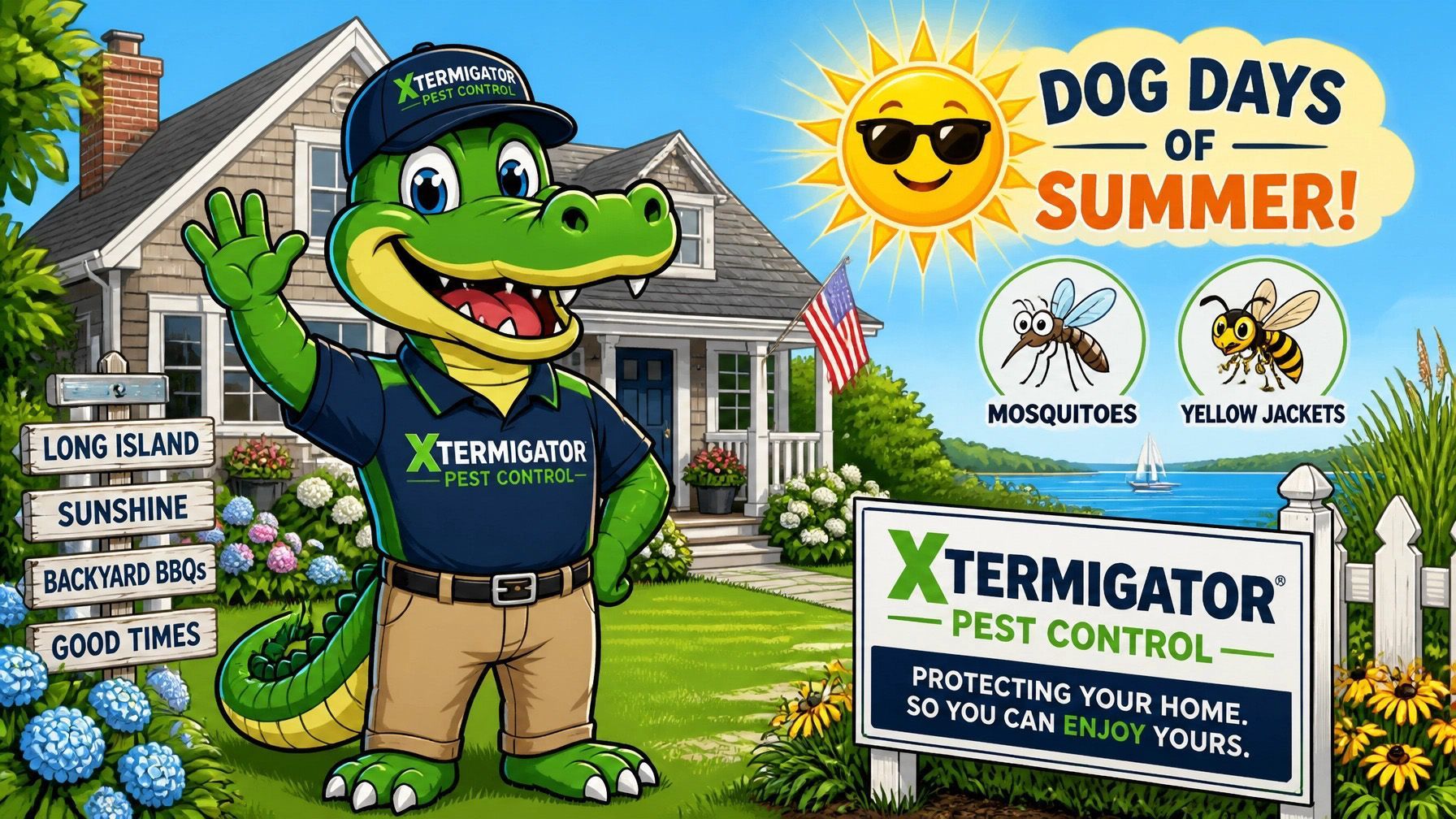
Welcome to late July on Long Island. If you’ve stepped outside lately, you’ve felt it: the "Dog Days" of summer have officially arrived. It’s that heavy, humid heat where the air feels thick enough to wear, and the cicadas are screaming in the trees. While we’re all trying to stay cool, the local pest population is doing the exact opposite. They are reaching their seasonal peak, and for some, their peak level of aggression.


As a 4th generation veteran and family-owned business that has protected Nassau and Suffolk Counties for over 50 years, we’ve seen every summer cycle imaginable. This week, however, there is a heightened sense of urgency. The goal is not to panic: it is to prepare. Between a major health warn ing from the state and the underground "landmines" currently hiding in your lawn, there is a lot to cover in this week's Xtermigator Report.

1. The NYS Health Warning: Mosquitoes are More Than a Nuisance

Just last week, between July 15 and July 17, 2026, the New York State Department of Health (NYS-DOH) issued a serious reminder to all residents. We aren't just dealing with itchy welts this year; West Nile virus (WNV) and Eastern Equine Encephalitis (EEE) are circulating at significant levels.

Evidence

In Suffolk County alone, over 200 mosquito samples have tested positive for West Nile virus. Even more concerning is the spread of EEE: a rare but life-threatening disease. While usually confined to a few counties, EEE-carrying mosquitoes have been detected in roughly 15 counties across the state this year. Following the tragic death of an individual in Ulster County, the state has declared an "imminent threat to public health."

The Solution: "Rebooting" Your Backyard

Mosquitoes are most active at dawn and dusk. To reduce your risk, you need to eliminate their breed-ing grounds. A single bottle cap full of water can host hundreds of mosquito larvae (the immature, aquatic stage of the insect).


Quick Tip: The 60-Second Scan Once a week, walk your property and tip over anything holding water: saucers under flowerpots, kids' toys, pool covers, and clogged gutters. If it holds water for more than four days, it’s a mosquito nursery.

2. Ground-Nesting Yellow Jackets: The Hidden "Landmines"

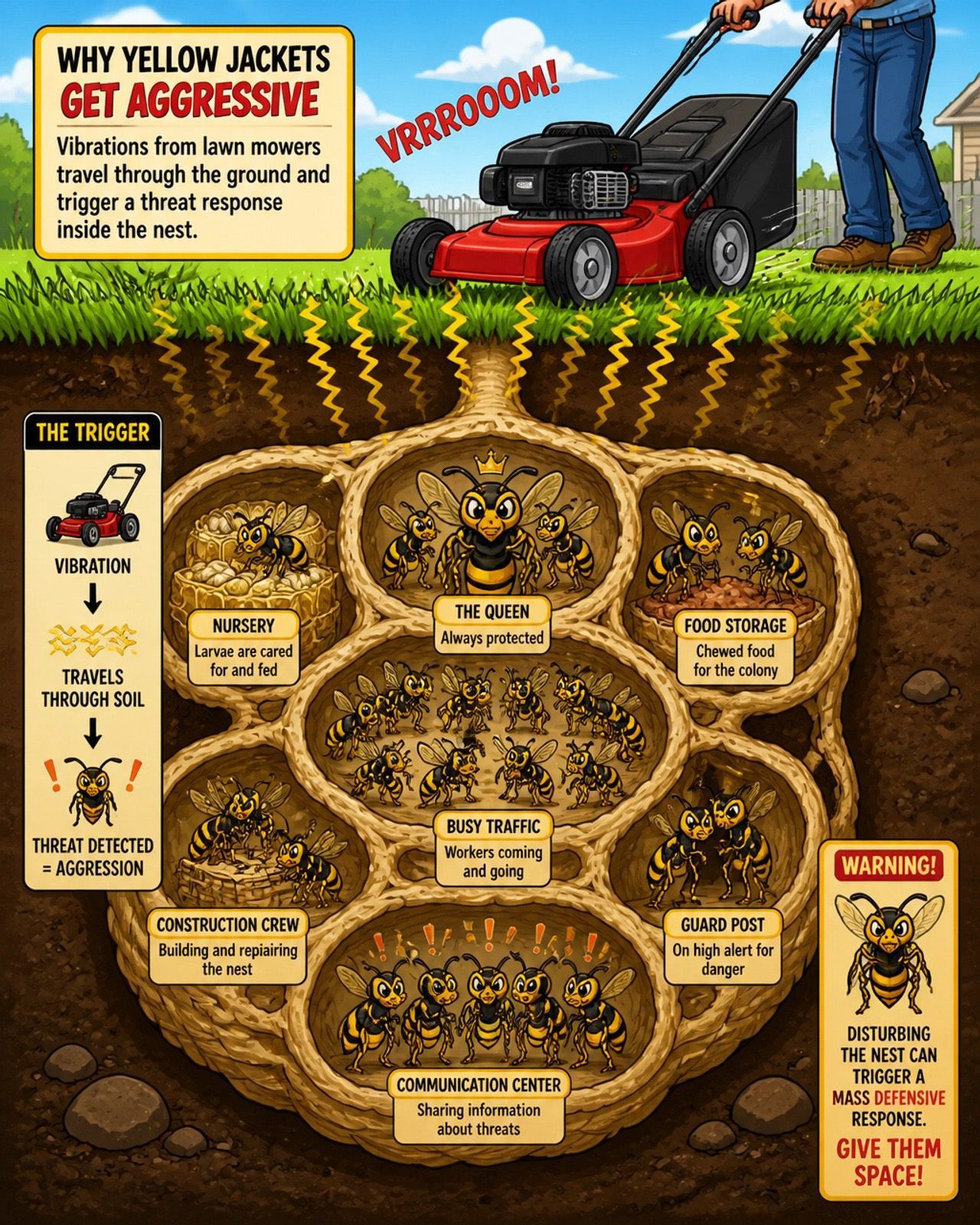
If there is one thing that keeps us busy in late July, it’s the sudden "explosion" of yellow jacket activity. Back in May and June, these colonies were small and quiet. Now? They have grown into massive societies of 1,000 to 5,000 workers.


The Vibration Trigger

Yellow jackets are social wasps, and they are incredibly protective of their home. Many species on Long Island build their nests underground, often using old rodent burrows or hollows in mulch beds.


Here is the danger: yellow jackets are extremely sensitive to vibration. When you pull out the lawn mower or the string trimmer, the engine's hum sends seismic waves through the ground. To the colony, this feels like a direct attack. They respond by releasing an alarm pheromone: a chemical sig-nal that tells every worker in the nest to fly out and sting anything that moves.


Why You Should NOT DIY

Unlike honey bees, yellow jackets can sting multiple times without dying. If you hit a nest with a mower, you aren't just dealing with one bug; you are dealing with a coordinated swarm. We strongly advise against using "home remedies" like pouring gasoline or boiling water down the hole. Not only is this environmentally damaging, but it often fails to reach the queen, leaving the colony angry and active.
3. Interior Invaders: The Search for Moisture

As the "Dog Days" bake the Long Island soil, outdoor water sources are drying up. This sends pests like ants and German cockroaches (the small, fast-breeding variety) indoors.


The Heat-Moisture Connection

In the pest control world, we often talk about estivation: a state of dormancy or slowed activity some animals enter during extreme heat. However, cockroaches do the opposite. They thrive in the high humidity of July. They aren't just looking for food; they are looking for water. This is why you might suddenly see them in your kitchen or bathroom, near the "sweating" pipes or the condensation on your fridge.


If you see what looks like "black pepper" in your cabinets, that isn't spilled seasoning. That is frass (insect excrement), a primary indicator of a growing infestation. Because these pests carry bacteria and can trigger asthma, reactive treatment isn't enough; you need a professional barrier to keep them out for good.

4. Managing the "Mental Load" of Home Maintenance

We know that keeping track of all this: the mosquito dunks, the lawn inspections, the potential for in-door invaders: can feel overwhelming. For many of our neighbors, especially those navigating ADHD or other invisible disabilities, the cognitive load (the total amount of mental effort being used in the working memory) of home ownership can be a lot to handle.


This is where technology can be a game-changer. Our affiliate partner, HeyPocket, offers an AI-driven tool designed to help manage these exact types of tasks. By offloading the "when was the last time I checked the gutters?" or "when is the exterminator coming?" to an intelligent system, you can reduce that mental clutter.


At AAA ABCO, we believe in an inclusive and empathetic approach. We don't just want to kill bugs; we want to provide you with peace of mind. Using tools like HeyPocket to organize your home main-tenance schedule ensures nothing falls through the cracks, allowing you to enjoy your summer in-stead of worrying about it.

The ABCO Advantage: Local, Family, and Veteran Owned

When you call AAA ABCO, you aren't getting a giant, faceless corporation. You are getting a team that has been part of the Long Island community for over five decades. We understand the specific biology of the pests in Stony Brook, the Hamptons, and every neighborhood in between.


  • Eco-Friendly Solutions: Our products are pet and child-safe. We treat your home as if it were our own.
  • 24-Hour Emergency Service: Yellow jacket nest in the doorway? We offer same-day service to keep your family safe.
  • Educational Approach: We don't just spray and leave. We teach you how to prevent the next in-festation.
  • Tri-Annual Plan: We don't sell you what you don't need. Our plans focus on the seasons that matter, providing any necessary supplies for the winter at no extra cost.

Take Action Today

Don't wait for a swarm to tell you there’s a nest in your yard, or for the mosquitoes to drive you in-doors. We offer free estimates and same-day service to help you reclaim your summer.


Contact AAA ABCO Termite & Pest Control:


  • Phone: 631-979-PEST (631-979-7378)
  • Website: Schedule Your Free Estimate
  • Social: Connect with us for more tips from the Xtermigator Report.


Let's keep your home safe, your family protected, and your "Dog Days" stress-free.

June 8, 2026
As temperatures rise and gardens burst into bloom, many homeowners discover an unwelcome guest on their plants—aphids.
May 31, 2026
If you step out into your Long Island backyard this week, you might see a peaceful landscape. But beneath that calm surface, a massive "guest list" is being finalized for the biggest party of the year.
May 26, 2026
When homeowners spot tiny bright-red bugs crawling across patios, foundations, mulch beds, or sidewalks, panic often sets in.
April 30, 2026
It is mid-March on Long Island. The frost is finally retreating from the soil, and the air carries that specific dampness that signals the return of spring.
April 27, 2026
Why the 2026 Early Pest Season Makes Pest Control on Long Island Critical This May
March 31, 2026
There is nothing quite like a Long Island summer. After months of gray skies and shivering through Nor'easters, opening the pool feels like a rite of passage.
QR code featuring a cartoon alligator wearing an orange shirt and backpack, with the text
March 18, 2026
Worried about smells or pests in your crawl space? Learn safe, non-chemical moisture and pest control fixes with this step-by-step IPM guide from ABCO XTERMIGATORS.
February 27, 2026
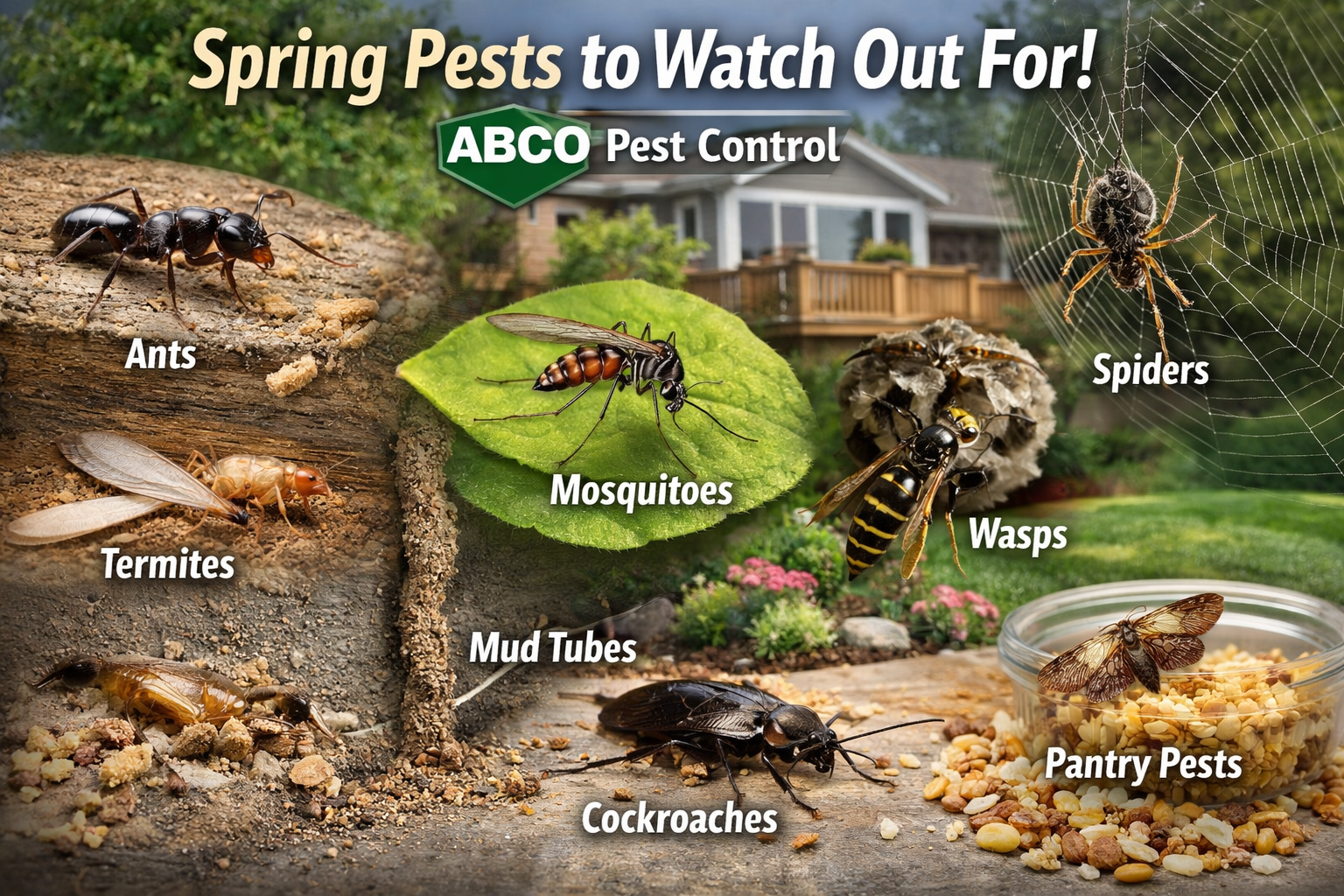
As spring approaches in about a month, homes and businesses begin to experience a predictable shift in pest activity. Rising temperatures, longer daylight hours, and increased moisture create ideal conditions for insects to breed, forage, and move indoors. The goal is not to panic—it is to prepare. A small amount of early-season prevention can reduce the likelihood of a larger infestation later in the spring and summer. Below is a practical, homeowner-friendly guide to what to look for as spring arrives, why it happens, and what ABCO Pest Control recommends you do first. Why Spring Triggers Pest Activity Spring is essentially “reboot season” for insects. Many pests that were dormant or hidden during colder months begin to move again. Insects and rodents respond quickly to: Warmer temperatures Rainfall and humidity Plant growth and pollen Increased outdoor food sources New nesting and breeding opportunities What you may notice first is not always the insect itself—but the evidence it leaves behind (wings, droppings, mud tubes, frass, or unusual odors). Top Spring Pests to Watch For (and the Early Warning Signs) 1) Ants (Carpenter Ants & “House Ants”) What you may see: Trails of ants along baseboards, windowsills, or kitchen counters Ants around pet bowls, trash cans, and sugar/crumb areas “Sawdust-like” debris (possible carpenter ant activity) Why spring matters: Ant colonies ramp up foraging in spring. Rain can drive ants indoors, and warmer days increase activity. ABCO quick tip: Seal entry points, wipe trails with a mild cleaner, and store food in sealed containers. If you see ants repeatedly in the same area, it may indicate a nest nearby (or inside). 2) Termites (Especially Swarmers) What you may see: Discarded wings near windows, doors, or light fixtures Swarming insects that resemble flying ants Mud tubes along foundation walls Blistered or hollow-sounding wood Why spring matters: Many termite species swarm in spring as colonies expand. Swarmers are a major red flag—not just a nuisance. ABCO quick tip: If you see wings, swarmers, or mud tubes, do not disturb the area—document it (photos help) and schedule a professional inspection. 3) Mosquitoes What you may see: More mosquito activity at dawn/dusk Increased bites—even early in spring Standing water in gutters, planters, tarps, toys, or birdbaths Why spring matters: Mosquito populations can build quickly after rainfall. Early elimination of breeding sites reduces the season’s peak intensity. ABCO quick tip: Dump standing water weekly and ensure gutters flow properly. Even small containers can become breeding zones. 4) Stinging Insects (Wasps, Hornets, Yellowjackets) What you may see: Small paper-like nests starting under eaves or deck edges Wasps hovering around rooflines, sheds, fences Increased activity near garbage cans and outdoor food Why spring matters: Spring is when queens establish nests. Early nests are smaller and easier to address before they expand. ABCO quick tip: Avoid spraying nests without proper equipment—stinging insects can become aggressive quickly. Early detection is ideal. 5) Spiders What you may see: More webs in corners, basements, garages, and around exterior lights Increased insects near lights (which attracts spiders) Spiders moving indoors as prey increases outside Why spring matters: Spiders follow food. If insects increase, spider sightings often follow. ABCO quick tip: Reduce insects around exterior lighting (consider changing bulbs), keep clutter down, and seal cracks where spiders enter. 6) Cockroaches What you may see: Roaches in kitchens, bathrooms, basements, or laundry rooms A musty odor in severe cases Speck-like droppings, especially under sinks or behind appliances Why spring matters: Moisture and warmth increase roach activity. Even “one roach” can be a sign of more nearby. ABCO quick tip: Fix leaks, keep drains clean, and reduce food residue and clutter. Roaches thrive where moisture and hiding places exist. 7) Pantry Pests (Moths, Beetles) What you may see: Tiny moths flying near kitchen cabinets Webbing in flour, cereal, rice, or pet food Small beetles in dry goods Why spring matters: Warmer weather increases reproduction cycles. Pantry pests often appear when older goods are stored too long. ABCO quick tip: Inspect dry foods, use sealed containers, and discard anything suspicious. “Spring Inspection” Checklist You Can Do This Week Here is a quick sweep that can prevent many common spring problems: Outside Walk your foundation line and look for cracks, gaps, or mud tubes Check around windows/doors for openings and worn weather stripping Clear leaf piles and debris near the home Reduce standing water (gutters, planters, tarps) Trim vegetation away from siding and roof edges Inside Look under sinks for moisture and leaks Check basement corners, garages, and utility rooms Clean crumbs and grease buildup (especially behind appliances) Store pantry goods in sealed containers Note any pest activity patterns (time of day, location, frequency) When It’s Time to Call ABCO Pest Control You should consider professional support if: You see termite swarmers or discarded wings Ants keep returning after basic cleaning and sealing You find droppings, gnaw marks, or ongoing pest evidence You notice recurring pests in the same rooms or entry points You want to prevent issues before peak season begins Spring is the best time to get ahead of pest pressure—before it becomes a summer-long headache. ABCO Pest Control: Spring Prevention Matters At ABCO Pest Control, we approach spring with a simple philosophy: early detection + targeted prevention = fewer surprises later. Whether you are noticing ants after rain, early mosquito activity, or signs that raise termite concerns, a spring check-in can help you protect your home and your peace of mind. If you are already using ABCO services, spring is also a great time to review your plan and ensure it matches seasonal conditions.  Ready for spring? If you are seeing early pest activity—or you want to prevent it before it starts—ABCO Pest Control is here to help. Contact us for an inspection or seasonal service plan so you can enjoy spring without unwanted visitors.
February 18, 2026
Educators and business professionals do not write in ideal conditions. They write between bells, meetings, commutes, and unexpected disruptions.
February 5, 2026
Independent publishing has shifted from a gatekept industry to an increasingly accessible ecosystem. Platforms that reduce technical barriers, simplify workflows, and support creative autonomy are central to this shift.