Spring Aphid Solutions: A Household DIY Guide from ABCO
As temperatures rise and gardens burst into bloom, many homeowners discover an unwelcome guest on their plants—aphids. These tiny, soft-bodied insects may seem harmless at first, but large populations can quickly damage flowers, vegetables, shrubs, and ornamental plants by sucking sap from leaves and stems.
At ABCO Termite & Pest Control, we believe that not every pest problem requires an immediate professional treatment. For minor infestations, there are several safe, effective, and affordable do-it-yourself methods homeowners can try before the problem becomes severe.
Here are some of our favorite spring aphid control strategies.
Understanding Aphids
Aphids are small insects that feed on plant juices. They commonly gather on:
- Rose bushes
- Vegetable gardens
- Fruit trees
- Flowering annuals
- Perennials and ornamental shrubs
Signs of an aphid infestation include:
✅ Curled or distorted leaves
✅ Yellowing foliage
✅ Sticky residue known as honeydew
✅ Black sooty mold growth
✅ Large clusters of insects on stems or leaf undersides
Because aphids reproduce rapidly, early intervention is important.
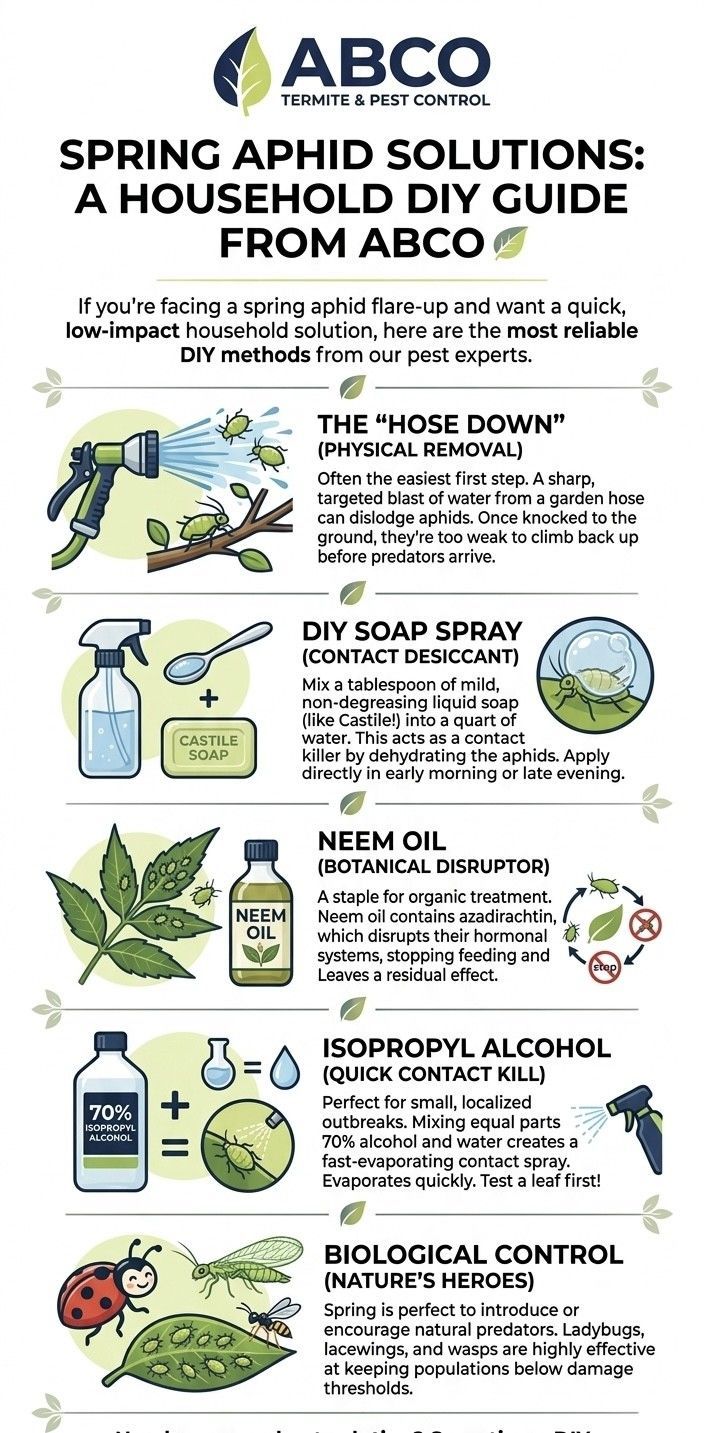
1. The “Hose Down” Method
Physical Removal
One of the simplest and most effective first steps is using a garden hose.
A strong spray of water can knock aphids off plants and onto the ground. Once displaced, many aphids struggle to return to their feeding locations, making them vulnerable to predators and environmental conditions.
Best Practices
- Spray early in the morning.
- Focus on the undersides of leaves.
- Repeat every few days as needed.
- Use caution around delicate flowers.
This approach is chemical-free and often works surprisingly well for small infestations.
2. DIY Soap Spray
A Simple Contact Treatment
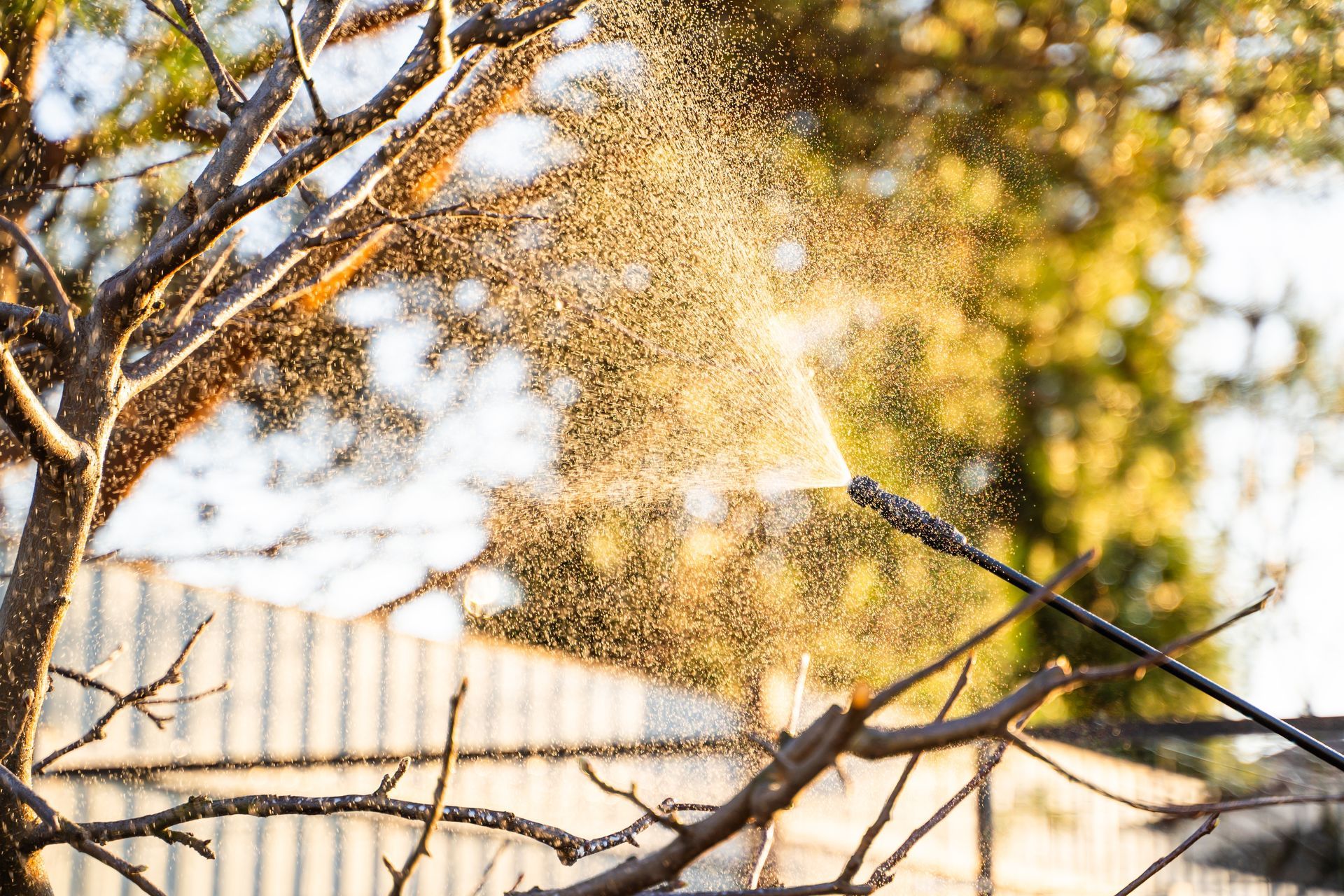
Mild liquid soaps can act as insecticidal sprays by disrupting the protective outer layer of aphids and causing dehydration.
Basic Recipe
- 1 tablespoon mild liquid soap (such as Castile soap)
- 1 quart water
- Mix thoroughly and spray directly on affected areas.
Important Tips
- Apply during cooler parts of the day.
- Avoid spraying in direct afternoon sun.
- Test a small portion of the plant first.
- Reapply after rain.
This treatment works only when it contacts the insects directly.
3. Neem Oil
A Natural Botanical Option
Neem oil has become a popular choice for homeowners seeking a more organic approach.
Derived from the neem tree, it contains compounds that interfere with insect feeding, growth, and reproduction.
Benefits
- Helps suppress aphid populations
- Provides residual protection
- Can be used on many ornamentals and garden plants
- Compatible with many integrated pest management programs
Always follow label directions and avoid applications during peak pollinator activity.
4. Isopropyl Alcohol Spray
Quick Contact Control
For localized outbreaks, a diluted alcohol spray can provide rapid knockdown.
Simple Mixture
Equal parts 70% isopropyl alcohol and water
Spray directly onto affected areas.
Caution
Some plants may be sensitive to alcohol.
Before widespread application:
✔ Test a small section first
✔ Wait 24 hours
✔ Watch for leaf damage or discoloration
If no injury occurs, proceed with treatment.
5. Let Nature Help
Biological Control
One of the most sustainable solutions is encouraging beneficial insects.
Natural aphid predators include:
🐞 Ladybugs
🪰 Lacewings
🐝 Parasitic wasps
These beneficial insects can dramatically reduce aphid populations and help maintain balance in your landscape.
How to Attract Beneficial Insects
Consider planting:
- Dill
- Fennel
- Yarrow
- Sweet alyssum
- Marigolds
These plants provide food and habitat for beneficial species throughout the growing season
When DIY Isn’t Enough
While these methods can be highly effective for small infestations, aphids can sometimes signal larger landscape issues.
Professional assistance may be needed when:
- Infestations repeatedly return
- Large trees are affected
- Honeydew is creating secondary pest problems
- Plants show significant stress or decline
- Multiple pest species are present
A professional inspection can identify underlying factors and help develop a long-term management strategy.
ABCO’s Spring Pest Prevention Tip
Healthy plants naturally resist pests better than stressed plants.
To reduce aphid pressure this season:
✔ Avoid excessive nitrogen fertilizer
✔ Water consistently
✔ Remove heavily infested plant material
✔ Encourage beneficial insects
✔ Inspect plants weekly during spring growth
Early detection is often the difference between a quick fix and a major infestation.
Need Help Identifying a Pest?
ABCO Termite & Pest Control is committed to helping homeowners make informed decisions about pest management. Whether you’re dealing with aphids, ants, termites, mosquitoes, or other nuisance pests, our team is here to help.
Visit our resource hub for additional homeowner tips, savings opportunities, and pest education tools.
ABCO Termite & Pest Control
“We don’t just treat pests—we help protect your home, family, and peace of mind.”
Related Resources
- Spring Garden Pest Prevention Checklist
- Identifying Beneficial Insects in Your Landscape
- Understanding Integrated Pest Management (IPM)
- Seasonal Pest Activity Guide for Homeowners
This article is intended for educational purposes. Always read and follow all product label instructions before applying any pesticide or treatment product.